Why fine-flavor cacao costs more (and what you're paying for)
Fine-flavor cacao is more expensive because every kilo carries more labour, more care and more risk than commodity cocoa, and because it is sold in small, documented lots instead of by the container. Here is where the money goes, and what one box turns into.

- Bulk cocoa is priced off the ICE futures market; fine-flavor cacao is usually negotiated lot by lot.
- The premium pays for lower-yield genetics, careful harvest, controlled fermentation, slow drying, sorting, lab testing, small-lot logistics, documentation and import costs.
- Spread across a bar, the beans are a modest line: an illustrative 25 kg box works out to under a dollar of cacao per 70 g bar, before freight.
- The real test of value is whether the lot is consistent and documented enough that you can buy the same profile again.
If you have ever compared a quote for fine-flavor beans with the cocoa price on the evening news, the gap can look hard to justify. The two numbers are not really measuring the same thing. One is the price of a global commodity, traded in bulk. The other is the price of a specific lot that someone fermented, dried, sorted, tested and shipped so that it tastes a particular way in your roaster.
This article breaks down what sits inside that second price, and shows the arithmetic from a box of beans to a bar on your shelf.
Two markets, two ways of setting a price
Bulk cocoa is priced against the cocoa futures contracts traded on ICE, in New York and London. Exporters, traders and large grinders quote against that benchmark, adjusting for origin and grade. The price moves with global supply and demand, weather in West Africa and speculation. In 2024 those forces pushed commodity cocoa prices to record highs, which was widely reported and felt across the whole chocolate industry.
Fine-flavor cacao usually does not follow the screen directly. It is negotiated per lot, between the grower or cooperative, the exporter, the importer and, eventually, the maker. Its price reflects what that particular lot costs to produce and move, and what its flavour is worth to the people who buy it. Futures still matter in the background, because a farmer who sees commodity prices jump will reasonably expect more for every kilo, but they are not the whole story.
For the full difference between the two categories, see fine-flavor vs bulk cacao.
What the premium pays for
1. Lower-yield, fine-flavor genetics
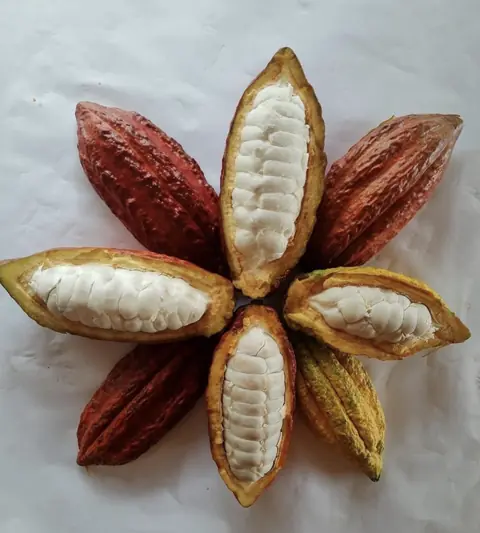
High-yield clones such as CCN-51 were bred to produce a lot of beans per tree, and many growers plant them for exactly that reason. Fine-flavor clones are chosen at least partly for what they taste like. A grower who plants for flavour rather than maximum yield accepts a trade-off that has to be paid back in price.
2. Hand harvest at the right ripeness
Pods are cut one by one with a blade, and they need to be picked at their point: under-ripe pods carry less sugar in the pulp, and fermentation runs on that sugar. On a fine-flavor farm, harvesting is a judgement made pod by pod rather than a sweep of everything on the tree.
3. Controlled fermentation and slow drying
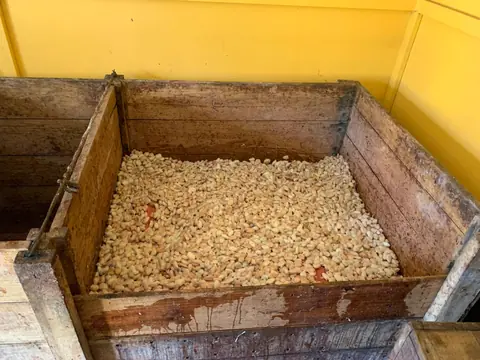
This is where most of the flavour is built, and most of the labour spent. Fermentation takes several days in wooden boxes, turned on schedule and stopped by smell and temperature. Drying takes days more, with the beans turned again and again so they lose moisture evenly. Rushing either step saves money and costs flavour. Our article on cacao from harvest to chocolate follows the process on the farm.
4. Sorting and grading
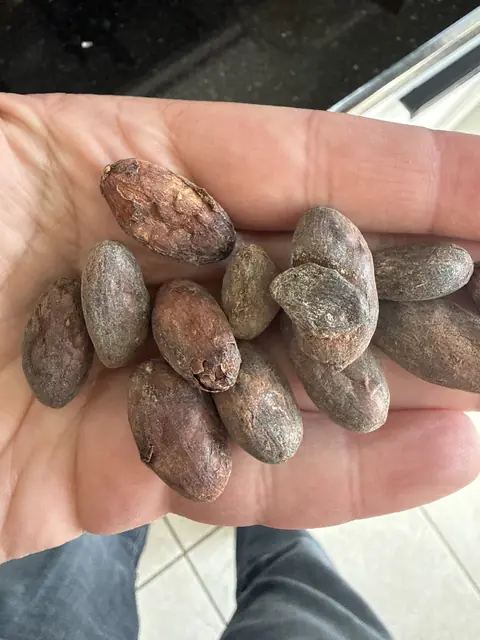
Flat, broken, germinated or mouldy beans are picked out by hand, and the lot is graded against a standard such as ISO 2451 or Colombia's NTC 1252. Every bean removed is weight that is not sold.
5. Lab testing
A serious lot comes with a cut test, moisture, and laboratory results for contaminants such as heavy metals, mycotoxins and pesticides, plus microbiology. Each report has a fee, and it is paid per lot, not per container.
6. Small-lot logistics, documentation and importing
Moving one tonne costs far more per kilo than moving a ship's hold. Fine-flavor lots also carry traceability back to the farm, and the importer carries the cost of compliance: FDA registration, food-safety documentation under FSVP, customs entry, warehousing and insurance.
7. Paying growers for quality
None of the above happens unless the grower is paid enough to make the extra work worthwhile. In the fine-flavor trade, growers who produce well-fermented, carefully dried beans generally expect a price that reflects that work rather than the commodity rate. That is one of the reasons the category exists at all.
A transparent example: SelvaCoa's pricing
Prices are easier to judge when you can see them. At SelvaCoa we sell one Colombian origin, Macondo, and our prices are public:
| Option | Price | Notes |
|---|---|---|
| Sample | Free, 1 kg | US shipping paid by SelvaCoa; one per company, for makers who roast from the bean |
| Trial pack | 5 kg at $16/kg ($80) | Plus freight at cost; paid before shipping; one per company |
| 25 kg boxes, up to 200 kg | $14/kg ($350 per box) | Hermetic GrainPro bag; freight at cost, quoted with the order |
| 25 kg boxes, over 200 kg | $13.25/kg | Freight at cost, no markup |
| Over 500 kg | Negotiated | Ships direct from Colombia; trade terms agreed with each buyer |
The beans are already imported, FDA-registered and documented under FSVP, and they ship from a US warehouse, so a maker needs no broker, customs entry or freight forwarder. That import work is part of what the per-kilo price covers. For order sizes, landed cost and what to ask before you buy in volume, see our guide to buying cacao beans wholesale.
What a kilo turns into
A price per kilo means more once you follow it to the bar. In a test roast of the Macondo lot, the beans lost 3.4% in roasting and 21.4% in shelling, for a 75% nib yield. Using that figure:
| Step | Arithmetic | Result |
|---|---|---|
| Beans | One box | 25 kg |
| Nibs | 25 kg × 75% | ≈ 18.75 kg |
| 70% dark chocolate | 18.75 kg ÷ 0.70 (nibs plus sugar, no added butter) | ≈ 26.8 kg |
| 70 g bars | 26,800 g ÷ 70 g | ≈ 380 bars |
This is an illustrative estimate, not a promise. It assumes the test-roast yield and no further losses. In practice your own winnowing efficiency, refining and conching, tempering, moulding and rejects will all take something away, and a recipe with added cocoa butter changes the maths. Use it as a starting point and replace each number with your own.
The cost of cacao per bar
Divide the box by the bars:
- At $14/kg: $350 ÷ ~380 bars ≈ $0.92 of beans per bar
- At $13.25/kg (over 200 kg): $331.25 ÷ ~380 bars ≈ $0.87 of beans per bar
Both figures are illustrative, exclude freight, and will rise as your real production losses come in. Even so, they put the premium in perspective. For a bar that sells on its origin and flavour, the beans are an important cost, but they sit alongside sugar, packaging, labour, equipment and your own time.
Put another way: the difference between a cheap lot and a good one is spread across hundreds of bars, while the difference in flavour shows up in every single one.
How to judge whether a premium is fair
A higher price is only worth paying if you can see what it buys. Before committing, ask for:
- The cut test and grade, with the date and the lab or analyst. Our guide to the cacao cut test explains what the numbers mean.
- The lab report for heavy metals, mycotoxins, pesticides and microbiology.
- A defined lot: how many kilos exist, so you know whether you can buy the same profile again.
- Landed cost: the per-kilo price plus freight and any import costs you would carry yourself.
- A sample you can roast and taste before you buy a box.
Our guide on how to choose a cacao bean supplier goes through these questions in more depth.
Frequently asked questions
Why is fine flavor cacao more expensive than bulk cocoa?
Because more work and more risk go into every kilo: lower-yielding genetics, hand harvest at the right ripeness, days of controlled fermentation and slow drying, sorting, lab testing, small-lot shipping, documentation and import costs. Bulk cocoa follows the futures market; fine cacao is priced lot by lot.
Is fine flavor cacao priced off the futures market?
Usually not directly. Bulk cocoa is priced against the ICE cocoa futures contracts. Fine-flavour cacao is normally negotiated per lot between grower, exporter, importer and maker, although a sharp move in the futures market can still affect what farmers expect for their beans.
How much do the beans cost per chocolate bar?
As an illustrative estimate, a 25 kg box of Macondo at 14 dollars per kilo costs 350 dollars and could yield roughly 380 bars of 70 g at 70% cacao, about 0.92 dollars of beans per bar before freight and production losses. Your own yield will differ.
Can I try fine flavor cacao before buying a full box?
Yes. SelvaCoa offers a free 1 kg sample to makers who roast from the bean, one per company, with US shipping paid. After that there is a 5 kg trial pack at 16 dollars per kilo plus freight at cost, also one per company.
- ICE Futures U.S. and ICE Futures Europe. Cocoa futures contract specifications.
- International Cocoa Organization (ICCO). Fine or flavour cocoa, and Quarterly Bulletin of Cocoa Statistics.
- Rodriguez-Medina, C. et al. (2019). Cacao breeding in Colombia, past, present and future. Breeding Science, 69(3), 373–382. doi:10.1270/jsbbs.19011
- Jaimes Suárez, Y.Y. et al. (2022). Modelo productivo para el cultivo de cacao (Theobroma cacao L.) en el departamento de Santander (2nd ed.). AGROSAVIA. doi:10.21930/agrosavia.model.7405538
- ISO 2451:2017. Cocoa beans: Specification and quality requirements. International Organization for Standardization.
- NTC 1252 (2021). Cacao en grano: Especificaciones y requisitos de calidad. ICONTEC.
- Macondo lot data: physical examination report No. 0250 (29 December 2025) and Macondo test-roast yields (SelvaCoa lot records).